About us

About us

The Department of Foreign Affairs and Trade (DFAT) promotes and protects Australia’s international interests to support our security and prosperity.

We work with international partners and other countries to tackle global challenges, increase trade and investment opportunities, protect international rules, keep our region stable and help Australians overseas.

Contents

Introduction
Australia in Brief publication
Australian democracy
A strong and open economy
Australia and the world
Climate action
Science and innovation
Tourism
Sport
Creative Australia
Study Australia
Visa and immigration requirements
Australia’s national symbols

Our people

Our locations

Corporate information

Introduction

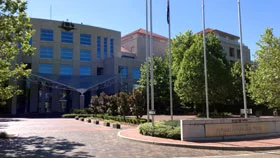
DFAT head office is in R.G. Casey Building, Canberra.

Resources

Australia is one of the most multicultural countries in the world, and home to the world’s oldest continuing culture. We have a highly skilled workforce and a proud history of democracy and stable government.

Australia’s Indigenous peoples have lived on and managed the land for more than 60,000 years however, the early treatment of Australia’s Indigenous population was marked by conflict and mistreatment.

Since the 1960s successive Australian Governments have joined with Aboriginal and Torres Strait Islander peoples to work towards reconciliation.

In 2008, the Australian Parliament passed a motion of Apology to Indigenous Australians for past mistreatment and injustices, especially the Stolen Generations, who were Indigenous children forcibly removed from their families. National Sorry Day is held every year on 26 May to remember and acknowledge this mistreatment. In July each year, NAIDOC Week celebrations mark the history, culture and achievements of Aboriginal and Torres Strait Islander peoples.

In the 1850s gold was discovered and the gold rush that followed brought people to Australia from all over the world.

In 1901, Australia became a nation, forming the Commonwealth of Australia. One year later, Australia became one of the first countries in the world to give women the right to vote.

In 1945, Australia became a founding member of the United Nations.

We take our international responsibilities seriously and work closely with other countries to promote peace and security. Since 1947, over 65,000 Australians have served in more than 50 peace and security operations around the world.

We have a strong and open economy.

Before the COVID-19 pandemic in 2020, Australia recorded 28 straight years of annual economic growth and was the world’s 14th largest economy.

Following the COVID-19 pandemic, we continue to assist countries in the Indo-Pacific to access safe and effective COVID-19 vaccines. For example, our regional vaccine program ensures that Pacific countries achieve full COVID-19 vaccine coverage.

We also provide development assistance to developing countries to increase their economic growth and reduce poverty. In 2019-20, Australia provided $4 billion in development assistance — this included $1.4 billion to the Pacific.

Today we are home to 25 million people from almost 200 countries.

All Australians have access to quality and affordable health care – for both physical and mental health.

Over 30 per cent of the Australian resident population were born overseas. While English is the national language, more than 300 languages are spoken in Australian homes. The top five (excluding English) are Mandarin, Arabic, Cantonese, Vietnamese, and Italian.

Australia in Brief publication

Australia in Brief provides an authoritative overview of Australia’s history, the land, its people and their way of life. It also looks at Australia’s economic, scientific and cultural achievements and its foreign, trade and defence policies.

Australia in Brief

Australian democracy

The core defining values of Australian Democracy are:freedom of election and being electedfreedom of assembly and political participationfreedom of speech, expression and religious beliefrule of lawother basic human rights.Australia is a representative democracy where voters elect candidates to carry out the business of government on their behalf.All Australian citizens over the age of 18 must vote in elections.The Australian Constitution of 1901 established a federal system of government, based on the British (Westminster) tradition of government. Powers are distributed between a national government (the Commonwealth) and the six states (New South Wales, Queensland, South Australia, Tasmania, Victoria and Western Australia). The Australian Capital Territory and the Northern Territory have self-government arrangements.Australia's elected national government is answerable to the Parliament for its actions. The Prime Minister leads a Cabinet of ministers, who are responsible for decisions made by their department.

A strong and open economy

Australians enjoy some of the highest living standards in the world despite being home to only 0.3 per cent of the global population.Since 1992, our economy has grown faster than any other major developed country. We have plentiful natural resources and a sophisticated services sector backed by a highly educated workforce.As one in five Australian jobs is trade related, we work hard to keep overseas markets open and Australians in employment.Australia has fifteen Free Trade Agreements (FTAs) with 26 countries.These agreements open up export markets for our companies, reduce the cost of doing business overseas, and give Australians greater choice and more affordable products.In 2020, FTAs with Indonesia, Hong Kong and Peru entered into force, as did PACER Plus, a free trade agreement between Australia, New Zealand and several Pacific Island countries.The COVID-19 pandemic had a dramatic effect on the Australian economy and society. But compared to our major trading partners, Australia has shown great resilience, underwritten by significant government support and ongoing demand for our mining exports.In 2018-19, the mining sector accounted for 8.5 per cent of Australia's GDP and minerals and fuels accounted for 50.9 per cent of Australia's goods and services exports. Our agriculture, tourism, education, financial services and science and technology products are also in high demand.We welcome foreign investment. It has helped build our economy by providing capital to finance new industries and enhance existing ones. Our well-regulated and transparent environment makes it easy to establish and operate a business in Australia.